Light Sp_ce
A marketplace for NFTs
A design case study for Light Space, a concept marketplace for creating, buying, and selling NFTs on the Ethereum blockchain.
1.0On this page
About the project
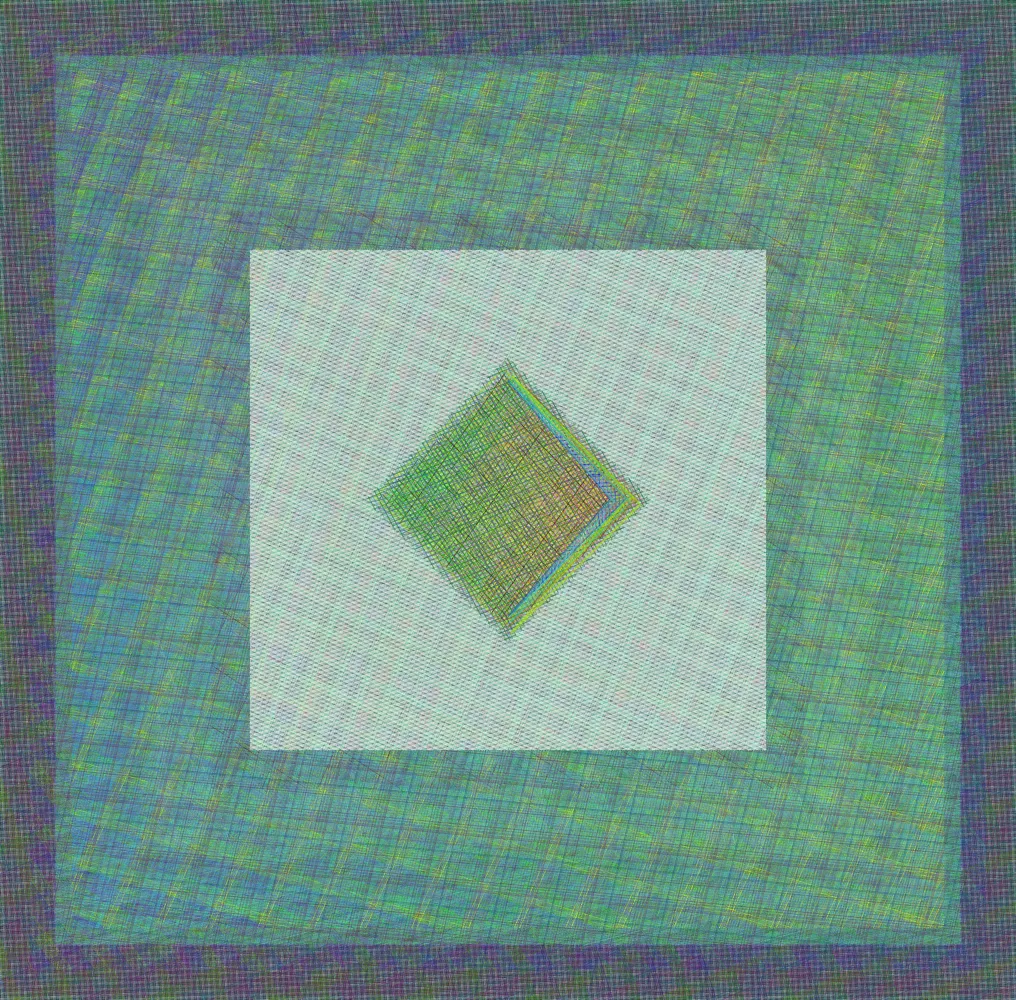
Light Space is a potential marketplace for NFTs based on the Ethereum blockchain.
Now, what exactly is an NFT?
- NFT stands for non-fungible token.
- Anything that can be converted into a digital form can be an NFT. Everything from your drawings, photos, videos, GIF, music, in-game items, selfies, and even a tweet can be turned into an NFT, which can then be traded online using cryptocurrency.
NFTs are like a signature for digital items: They authenticate ownership of digital assets like art, collectibles, music, videos, in-game assets, and more. Just like physical certificates, they document:
- Who created it
- When it was created
- Who bought it (and when)
- The price(s) it sells for
- Who owns it now
All of this is public via a blockchain, so anyone can trace each of your NFTs from the original creator all the way to your wallet—and verify its authenticity
What is a blockchain?
- A blockchain is a digitally distributed, decentralized, immutable public ledger that exists across a network.
- Blockchains are best known for their crucial role in cryptocurrency systems, such as Bitcoins.
- A blockchain collects information together in groups, known as blocks, that hold sets of information. Blocks have certain storage capacities and when filled, are closed and linked to the previous block.
Blockchains that host NFTs include:
- Flow
- Tezos
- Polygon
- Ethereum
- Solana
Light Space is based on Ethereum Blockchain.
Scope
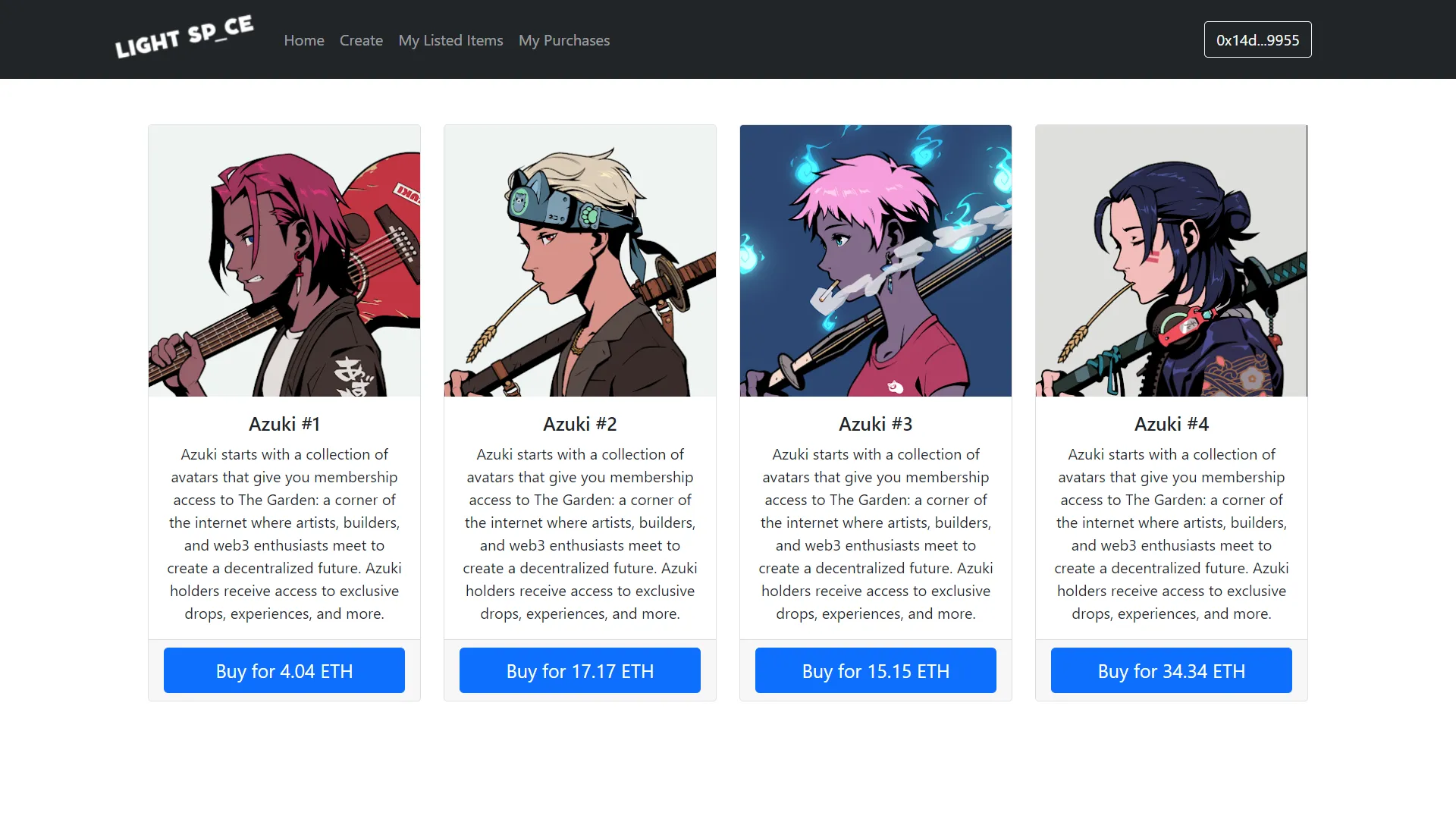
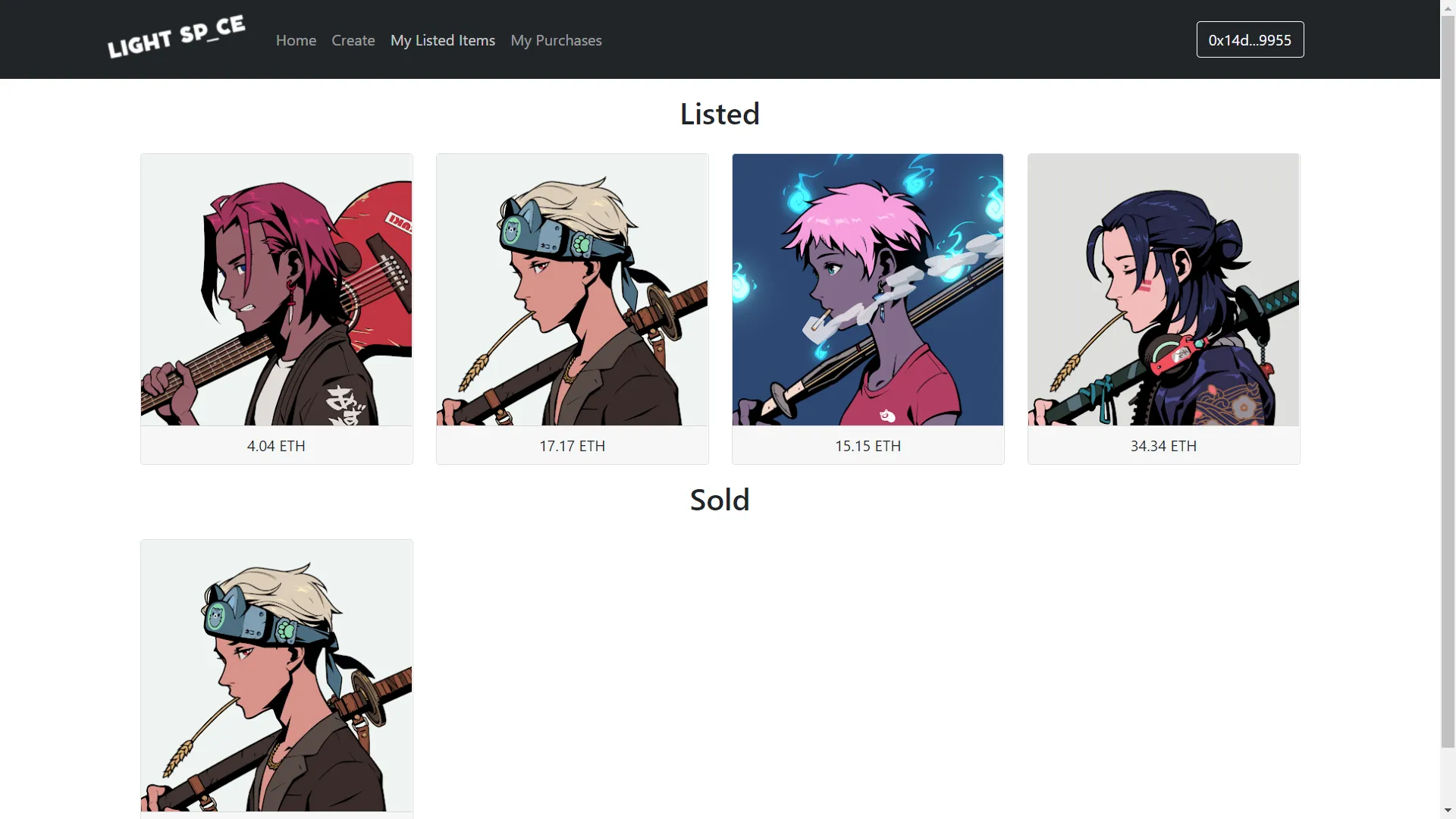
An NFT marketplace allows its users to build an account, connect to a crypto wallet, upload digital artworks and make sales or bid. Artists can claim ownership of their artwork and even get paid for it.
The NFT allows a creator to name a rightful owner of a file, giving them the rights to present, access or resell it. In the Digital Art space, this is beneficial technology. It allows the purchaser a guarantee that they are the owners of a one-of-a-kind digital asset.
Technologies used
VS Code (IDE)
Visual Studio Code includes built-in support for IntelliSense code completion, rich semantic code understanding and navigation, and code refactoring.
VS Code also integrates with build and scripting tools to perform common tasks making everyday workflows faster. VS Code has support for Git so you can work with source control without leaving the editor including viewing pending changes diffs.
Node.js (back-end)
Node.js is an open-source, cross-platform, back-end JavaScript runtime environment that runs on the V8 engine and executes JavaScript code outside a web browser. Node.js lets developers use JavaScript to write command line tools and for server-side scripting—running scripts server-side to produce dynamic web page content before the page is sent to the user’s web browser.
Ethers (Blockchain Interaction)

The ethers.js library aims to be a complete and compact library for interacting with the Ethereum Blockchain and its ecosystem.
Solidity (Smart Contracts)
Solidity is an object-oriented, high-level language for implementing smart contracts. Smart contracts are programs which govern the behaviour of accounts within the Ethereum state.
Solidity is statically typed, supports inheritance, libraries and complex user-defined types among other features.
With Solidity you can create contracts for uses such as voting, crowdfunding, blind auctions, and multi-signature wallets.

Hardhat (Development Framework)
Hardhat is an environment developers use to test, compile, deploy and debug dApps based on the Ethereum blockchain. As such, it helps coders and developers to manage many of the tasks that are inherent to developing dApps and smart contracts.
IPFS (Metadata storage)
IPFS is a peer-to-peer (p2p) storage network. Content is accessible through peers located anywhere in the world, that might relay information, store it, or do both. IPFS knows how to find what you ask for using its content address rather than its location.
React Router (Navigational components)

Components are the heart of React’s powerful, declarative programming model. React Router is a collection of navigational components that compose declaratively with your application. Whether you want to have bookmarkable URLs for your web app or a composable way to navigate in React Native, React Router works wherever React is rendering–so take your pick!
Features
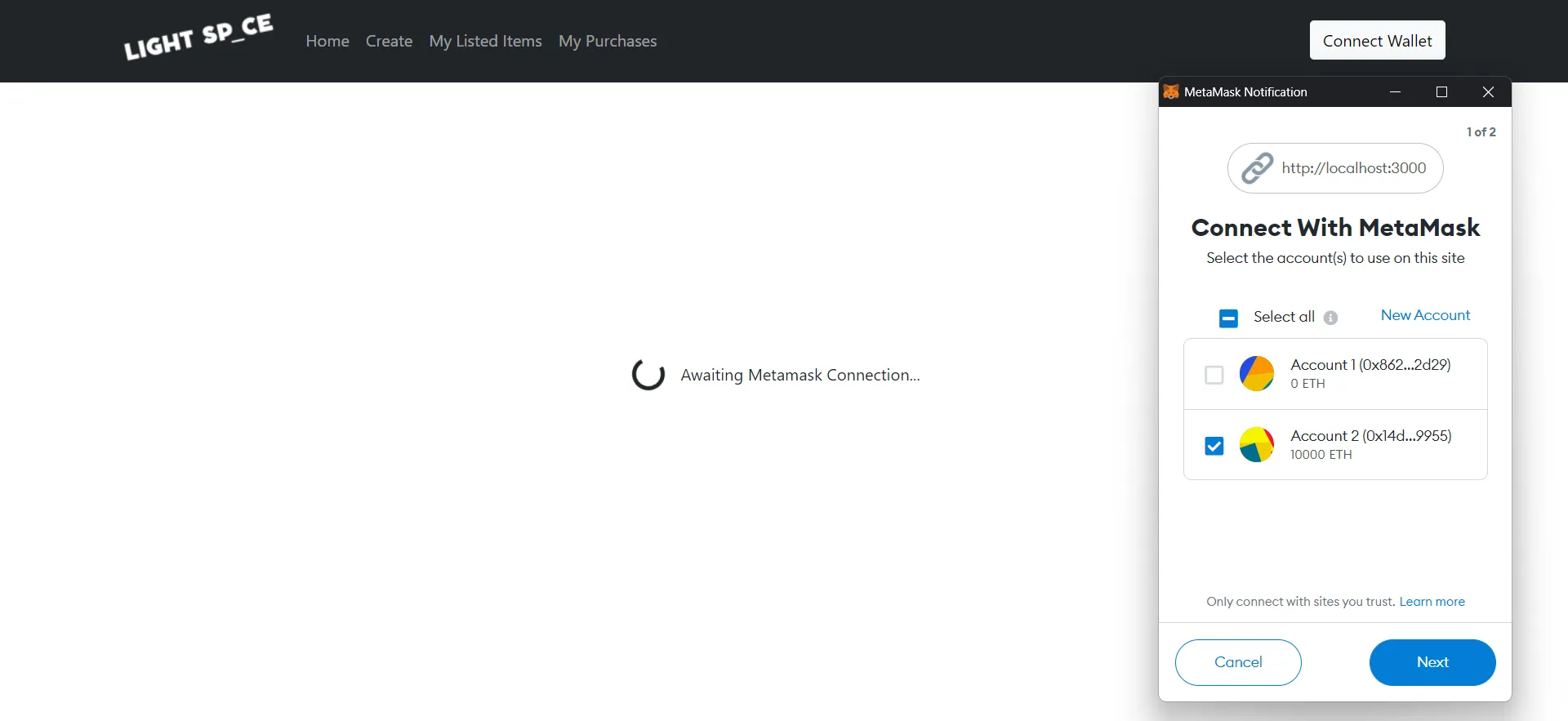
- Metamask wallet support
- Different categories of NFTs
- Collections of different categories
- Create favorites
- Filter and feature based search of NFTs
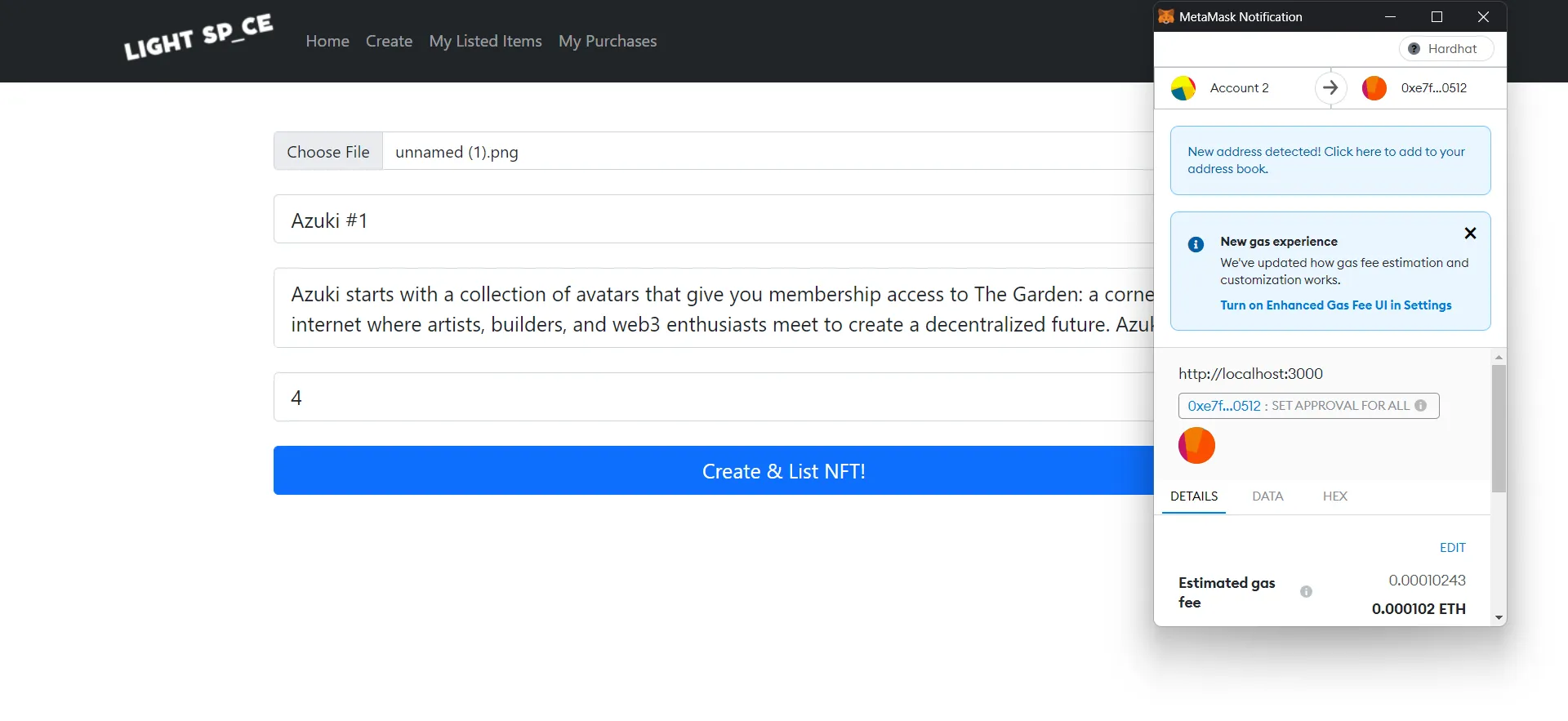
- Minting NFTs
- Listing NFTs
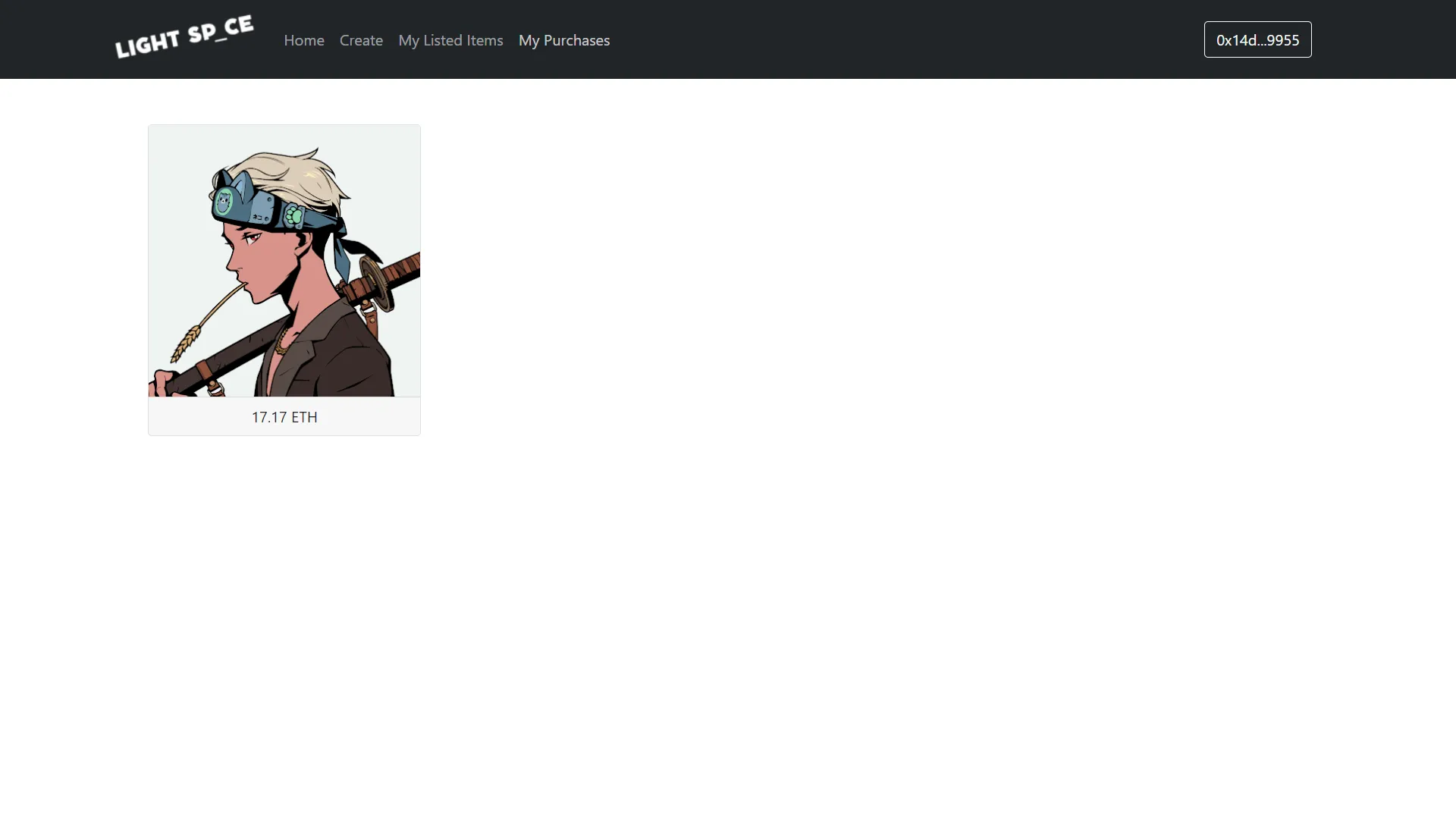
- Transfer of Ownership
- Ownership history
Revenue Model
- Light Space provides its marketplace infrastructure completely free of charge. As such, it will not cost anything to list an NFT.
- It will make money from service fees. These fees are paid whenever a digital asset is successfully sold via the platform.
- The business model of Light Space can be classified as an online marketplace. Light Space will act as a (mostly) secure and reliable intermediary between buyers and sellers.
- Buyers benefit from knowing that they receive authentic items. Meanwhile, suppliers can tap into a readily available pool of buyers, which drives up their selling price. As a result, the fees they pay are likely offset by the greater price that they can command.